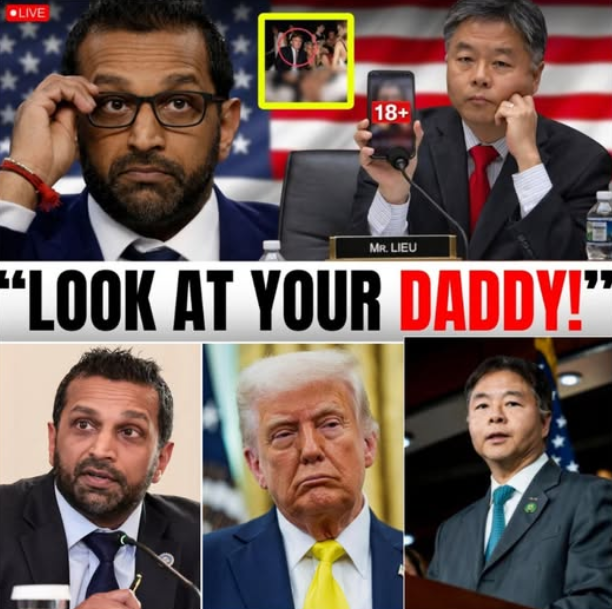
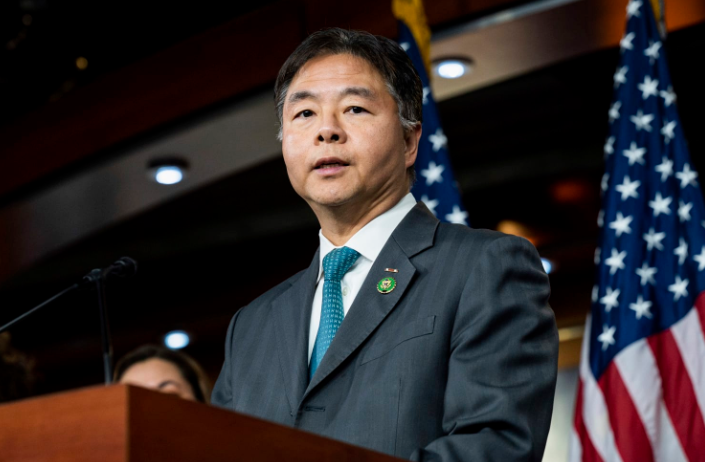
WASHINGTON — A tense exchange during a congressional hearing this week placed renewed attention on the federal government’s handling of investigations tied to the late financier Jeffrey Epstein. During questioning by Representative Ted Lieu, FBI Director Kash Patel acknowledged that no new criminal charges have been filed against individuals connected to Epstein’s network during his tenure leading the bureau. The moment unfolded before the House Judiciary Committee and quickly became one of the most closely watched segments of the hearing.
Lieu framed his questioning around results rather than process. He asked Patel to state how many new criminal cases had been brought against individuals associated with Epstein’s trafficking network since Patel assumed leadership of the FBI roughly 11 months earlier. According to the exchange, Patel initially described the complexities of multi-jurisdictional investigations and the role of federal prosecutors in deciding whether to bring charges, before eventually confirming that no new charges had been filed during that period.
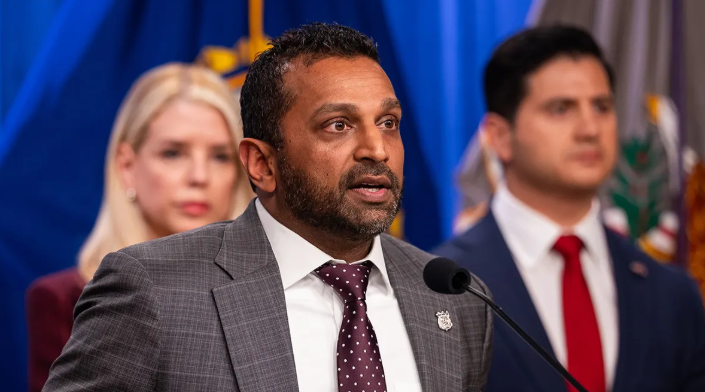
The questioning then turned to investigative activity rather than prosecution decisions. Lieu asked Patel to identify the most recent investigative step taken by the FBI in any Epstein-related matter, such as an interview, subpoena, or document request. Patel responded that specific operational details would normally be contained in internal case management systems and were not immediately available during the hearing, prompting further clarification from the congressman.
After consulting briefly with legal advisers seated behind him, Patel indicated that the most recent action he could recall was a document-preservation notice tied to congressional file releases. He said the notice was issued before his confirmation as FBI director. That statement suggested that the last identifiable investigative step he referenced occurred prior to his time leading the bureau, though officials did not provide additional documentation during the hearing to verify timelines.
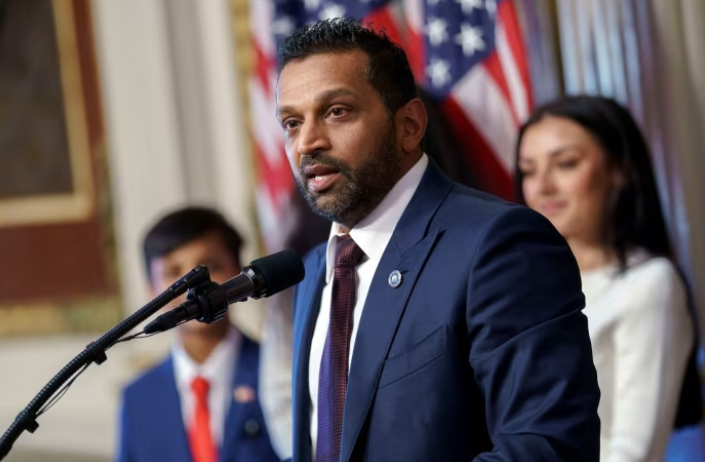
Lieu then asked whether the Epstein investigation should be considered active or inactive under Patel’s leadership. Patel responded that matters connected to Epstein remain under “appropriate case management status within the bureau’s established framework,” language that stopped short of describing the investigation with either label. Legal observers noted that such phrasing is common when officials seek to avoid discussing the operational status of sensitive investigations in public hearings.
The exchange occurred amid long-running public scrutiny of the Epstein case and its broader implications. Epstein, who died in federal custody in 2019, had previously been charged with trafficking offenses. His associate Ghislaine Maxwell was later convicted in federal court for her role in recruiting and abusing underage girls. Those prosecutions remain the most significant criminal outcomes directly tied to the network investigators examined.
For years, questions have circulated about whether additional individuals who appeared in Epstein-related records — including flight manifests, contact books and financial documents — might face charges. Legal experts caution that the presence of a name in investigative records does not necessarily establish criminal wrongdoing. Prosecutors must meet strict evidentiary standards before filing charges, a threshold that often requires extensive corroboration and witness testimony.
Still, the hearing underscored the continuing political and public interest surrounding the case. Members of Congress from both parties have previously called for greater transparency regarding investigative files and prosecutorial decisions. While the session moved on to other topics after the exchange, the brief line of questioning by Lieu highlighted lingering uncertainty about the current status of federal investigative work connected to Epstein’s network and whether additional cases could emerge in the future.
JUST IN: International Criminal Court Issues Arrest Warrant for U.S. President Donald Trump, Pete Hegseth, Benjamin Netanyahu, Alleging War Crimes, Crimes Against Humanity, Genocide, and Aggression Related to Military Actions in Iran, as Well as Trump’s Alleged Involvement with Jeffrey Epstein
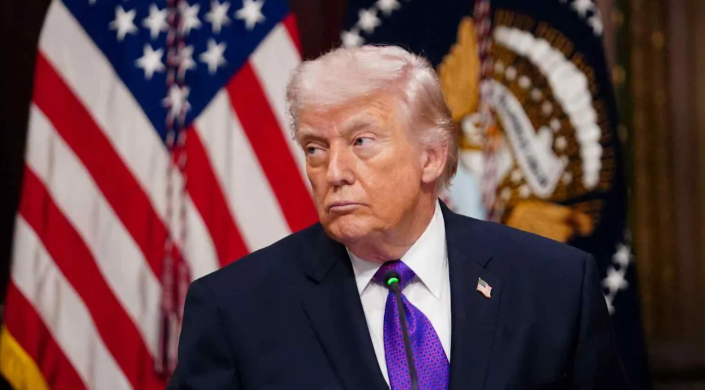
WASHINGTON, D.C. – March 8, 2026 – In a stunning political reversal, House Democrats have successfully secured enough votes to compel President Donald Trump to testify under oath before the House Oversight Committee regarding his relationship with the late convicted sex offender Jeffrey Epstein. The move comes just days after former President Bill Clinton concluded his own historic, closed-door deposition, a decision Republicans may now regret as the political precedent they set is turned against them .
The dramatic escalation was confirmed late Friday by multiple sources familiar with the committee’s whip count. By leveraging a strategy first employed by Chairman James Comer (R-Ky.) to subpoena Bill Clinton, Democrats—led by Ranking Member Robert Garcia (D-Calif.)—have cobbled together a bipartisan coalition to issue a subpoena for the sitting president.
“The person who appears more times in the files than any other political figure is President Trump,” Garcia told reporters following a tense closed-door meeting. “The Republicans created a new precedent when they forced President Clinton to testify. You cannot have one rule for the Clintons and another rule for Donald Trump. The ‘Clinton Rule’ is now the law of this committee, and it applies to everyone” .
According to aides familiar with the proceedings, at least three Republican members have signaled they will vote with the unified Democratic caucus to issue the subpoena. This mirrors the dynamic seen earlier this year when a House subcommittee voted to subpoena the Justice Department for Epstein files, with GOP members breaking ranks .
The decision throws the committee—and the House Republican leadership—into chaos. Chairman Comer has spent the week touting that Bill Clinton’s testimony “exonerated” Trump, claiming the former Democrat told the committee he had “no liability” regarding Epstein . However, Democrats have fiercely disputed Comer’s characterization of that testimony.
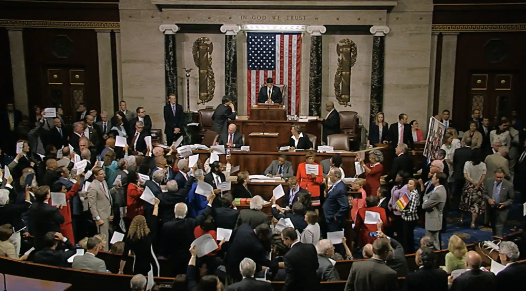
Rep. Maxwell Frost (D-Fla.) took to social media to “clarify” Clinton’s remarks, noting that the former president confirmed Trump and Epstein had a “close relationship” that only ended due to a “land dispute”—directly contradicting Trump’s own claims about why he cut ties .
“The Chairman’s summary was not a complete, accurate description,” Garcia said. “President Clinton brought up information that raises new, important questions. That is precisely why we need to hear directly from President Trump and why we need the full transcript released” .
The subpoena is expected to compel Trump to provide testimony regarding specific allegations and missing documents. Democrats have pointed to a recent NPR investigation revealing that the Department of Justice withheld FBI interview summaries related to a woman who accused Trump of sexually assaulting her when she was a minor—allegations the White House has vehemently denied .
“We have seen the DOJ files and the archive manifest that clearly shows that the interviews and information around this survivor have been removed,” Garcia alleged. “Where are these files? Who removed them? Those questions have to be answered by the president, under oath” .
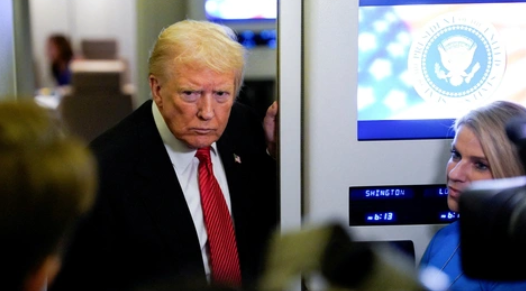
The White House has not yet issued a formal response to the committee’s vote. However, Press Secretary Karoline Leavitt dismissed the effort as a “baseless political stunt” in a statement to Fox News. “The President has been crystal clear: he had no involvement with Epstein’s horrific crimes, a fact that has been confirmed by multiple investigations, including the testimony of Bill Clinton himself,” the statement read.
President Trump, speaking to reporters before a trip to Texas on Friday, addressed the possibility of testifying indirectly when asked about Commerce Secretary Howard Lutnick facing a potential subpoena. “Howard would go in and do whatever he had to say. He’s a very innocent guy,” Trump said, adding that Lutnick had done “nothing wrong” .
A High-Stakes Constitutional Clash
The move sets the stage for an unprecedented constitutional and political clash: a sitting president being forced to testify before a congressional committee about his associations before taking office.
Rep. Ro Khanna (D-Calif.), who has been vocal about securing votes for the subpoena, framed the issue around consistency. “Before this, we had the Trump rule,” Khanna said, referencing Trump’s previous defiance of a Jan. 6 committee subpoena. “Now we have the Clinton rule, which is that presidents and their families have to testify when Congress issues a subpoena. We are simply applying the Clinton rule to everyone” .
Republicans on the committee attempted to paint the Democratic move as a desperate act. “The evidence is clear thus far that Donald Trump has no liability,” Comer reiterated. For Democrats to pursue this after Clinton’s testimony makes them “look like fools for only obsessing over Donald Trump” .
Despite the Chairman’s objections, the votes appear locked in. If President Trump refuses to comply, the House would likely face the decision of holding their own party’s leader in contempt of Congress—a scenario that would plunge Washington into its most severe constitutional crisis in decades.
The Oversight Committee is expected to vote formally on the subpoena early next week. If issued, it would mark the first time in American history that a sitting president has been compelled to testify before Congress regarding his personal conduct.