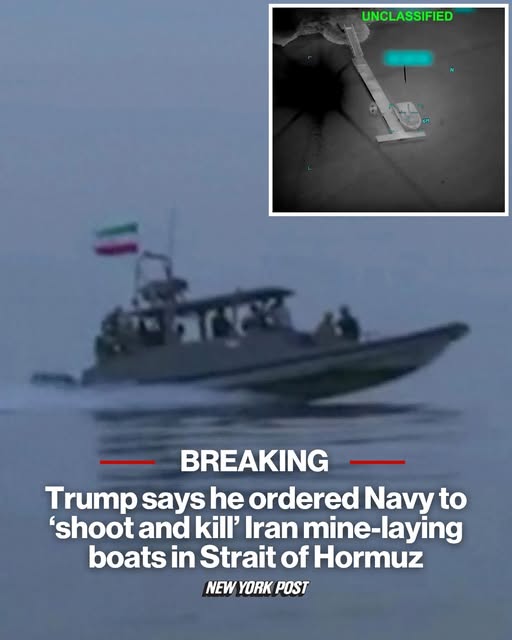
President Trump said Thursday he has ordered the US Navy to take lethal action against any Iranian vessels attempting to lay mines in the Strait of Hormuz — escalating tensions despite a fragile cease-fire with Tehran.
“I have ordered the United States Navy to shoot and kill any boat — small boats though they may be — that is putting mines in the waters of the Strait of Hormuz,” Trump wrote on Truth Social. “There is to be no hesitation.”
“Additionally, our mine ‘sweepers’ are clearing the Strait right now,” he added. “I am hereby ordering that activity to continue, but at a tripled-up level!”

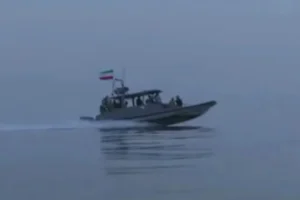
An IRGC boat allegedly taking part in an operation to seize ships attempting to cross the Strait of Hormuz.IRIB TV/AFP via Getty Images
The directive came just hours after the War Department confirmed the seizure of a sanctioned tanker carrying Iranian oil in the Indian Ocean — the second such interception this week.
The developments mark another strain on a repeatedly extended cease-fire meant to halt weeks of clashes between Washington and Tehran, including strikes on military targets and disruptions to global shipping lanes.
Trump most recently extended the truce Tuesday, saying it would remain in place while Iran works to produce a “unified” proposal ahead of a second round of peace talks in Islamabad, Pakistan.
But tensions have continued to simmer.
Iranian-linked vessels and proxy forces have repeatedly threatened commercial traffic in the Strait of Hormuz — a vital artery for global oil shipments — using naval mines and fast-moving boats to harass and damage tankers.
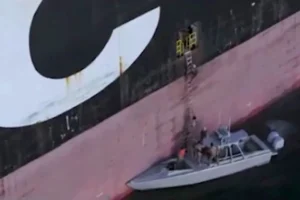
Meanwhile, Politico reported Thursday that British military divers are preparing to carry out mine-clearing operations in the strait as part of a potentially multinational effort, with Royal Navy specialists trained in explosive ordnance disposal ready to deploy alongside autonomous mine-hunting systems, according to the United Kingdom’s Ministry of Defense.
The UK and other European nations have spent weeks talking about a broader coalition mission to secure the waterway and restore safe navigation.
But so far, those efforts have largely remained in the planning stages.